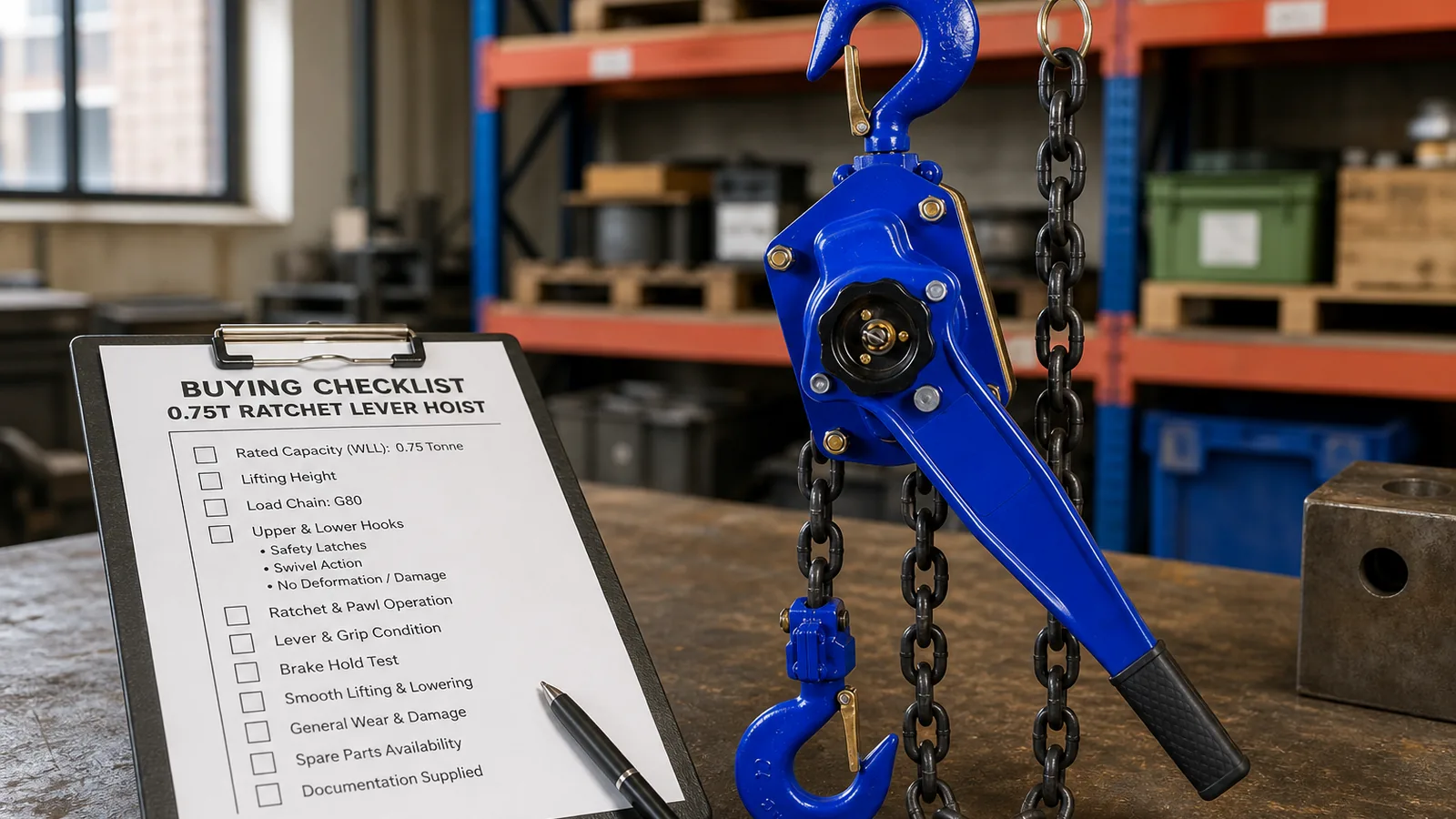
Checklist before buying lever hoist UK: UK Practical Guide
Direct answer checklist
A practical checklist before buying lever hoist UK starts with matching capacity and lift height to the job, confirming a sound anchor and structure, reading the rating plate, and planning careful operation plus routine maintenance—not guessing from marketing claims alone.
- Confirm the hoist class suits your heaviest planned load (for many light industrial pulls, a 0.75t-class unit is the starting point to verify against the plate).
- Check required lift or pull distance against the stated chain length (for example, a 6 m class).
- Complete an anchor point check before using lever hoist gear and check structure before mounting come along style tools.
- Inspect hooks, chain, brake/ratchet feel and labels before purchase or first use.
- Keep records of checks and seek competent advice when anything is unclear.
Buyer and maintenance guides consistently treat chain and lever hoists as tools for precise positioning of loads that exceed unaided handling, and they stress careful operation with regular upkeep for lasting service.
Pre-checks before lift or purchase
Use this capacity lift height checklist hoist buy sequence before you commit to a model or start a lift.
Capacity and lift height
- Read the manufacturer rating plate: use confirmed details or assume a safe working load beyond what the plate states for that hoist class.
- Include load weight, any attachments, and the direction of pull (vertical lift versus angled come-along use).
- Confirm chain length covers the full travel you need with margin for positioning, not just the shortest path.
Anchor and structure
- Do an anchor point check before using lever hoist equipment: the support must be rated and suitable for the forces involved.
- Check structure before mounting come along or lever hoist hardware—beams, vehicles, racks or temporary frames can fail if they were never intended as lifting points.
- Verify clearances, side-loading risk and that the load path will not foul people or plant.
Condition and suitability
- Look for stretch, wear, cracks, deformation, missing parts or illegible markings on chain and hooks.
- Confirm the hoist type matches the task: lever hoists suit precise placement and pulling; compare types and trade-offs in a reputable buyers’ overview before you decide.
- Plan for careful operation and regular maintenance so the unit keeps its intended operational features under normal conditions.
Red flags to stop
- No readable rating plate, capacity marking or identification.
- Damaged chain, hooks, latch, lever, brake or ratchet action that feels unreliable.
- Anchor or structure not verified for the load—do not mount and “see what happens”.
- Anyone proposing to exceed the marked class, remove safety devices or improvise untested attachments.
- Claims of certificates, examination stickers or exact test numbers you cannot verify from the equipment and competent sources—stop and get advice.
Record-keeping tips
- Note model identity, marked capacity class, chain length class and date of pre-use checks.
- Record who checked the anchor and structure, and any defects found or repaired.
- Keep the supplier manual and follow its care and inspection routine rather than relying on memory.
- Log when the hoist is taken out of service and why.
Next step
If you need a compact manual ratchet lever hoist for warehouse, construction or automotive lifting and pulling, review the Manual Lift 0.75t 6M ratchet lever hoist product details and match the rating plate and 6 m chain class to your checklist before you buy.
FAQ
What belongs on a checklist before buying lever hoist UK?
Capacity class versus load, lift or pull distance versus chain length, anchor and structure checks, visible condition of chain and mechanism, and a plan for careful use and records—always guided by the rating plate and competent advice.
Why check the structure before mounting a come-along?
A come-along or lever hoist transfers force into whatever you attach to; if the structure is weak, temporary or unmarked for that duty, the failure can be the support rather than the hoist.
Can I rely on LOLER paperwork alone when buying?
Do not assume certificates or stickers from sales copy. Verify markings on the hoist itself and take competent advice for thorough examination duties that apply to your workplace.