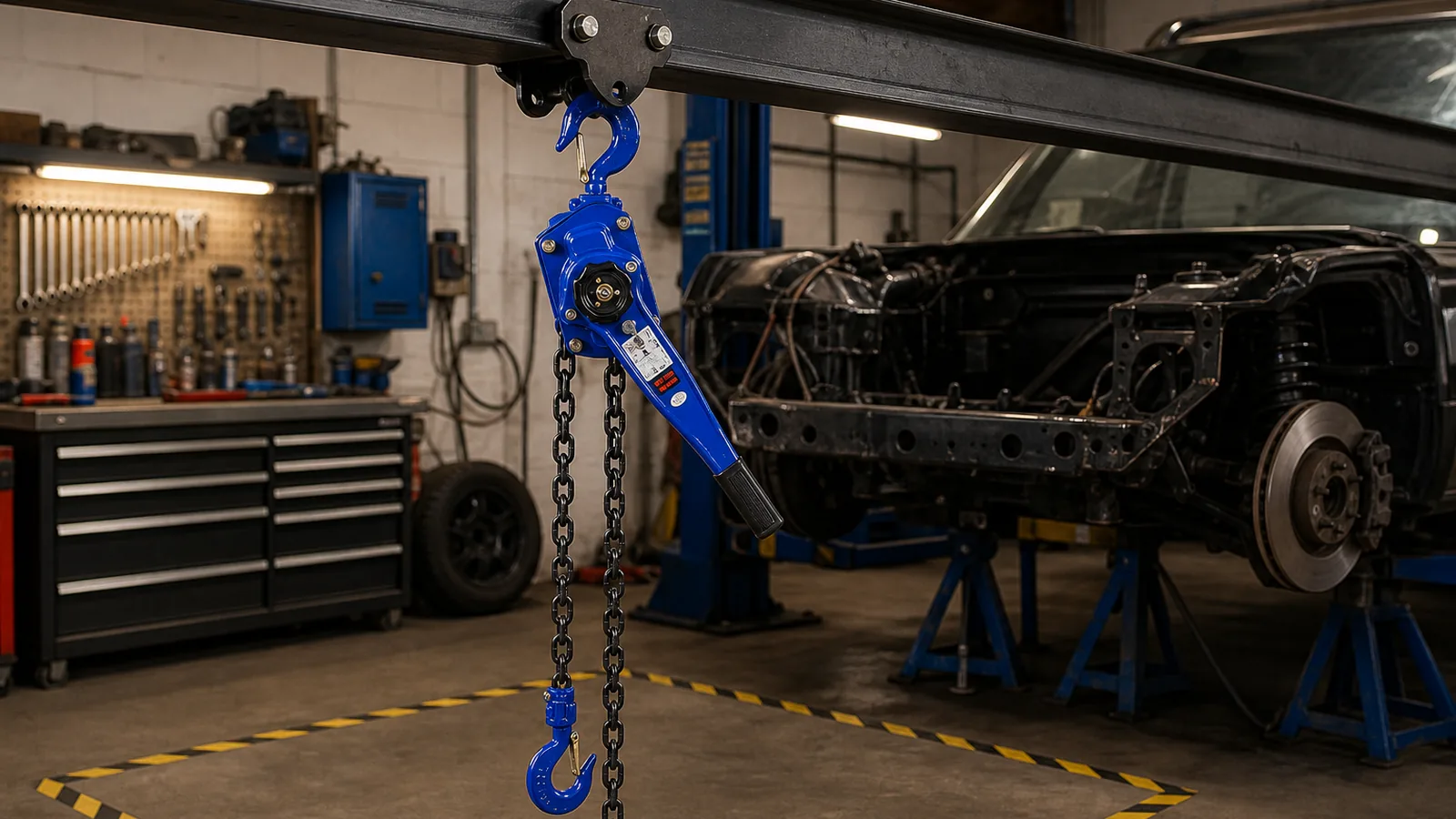
Lever hoist automotive workshop UK: UK Practical Guide
Use-case answer
A lever hoist automotive workshop UK set-up is typically chosen for controlled lifting and pulling where space is tight, power is limited, and a rated manual tool is needed for short, precise moves on vehicles, frames, or workshop fixtures. In many UK garages and light industrial bays, a compact ratchet lever hoist (sometimes called a come-along) is preferred for positioning work rather than for continuous high-volume lifting.
For a 0.75t-class option with a 6 m G80 steel chain intended for warehouse, construction, and automotive lifting or pulling, always match the task to the rating plate and your site’s lifting plan before use. Wider workshop equipment ranges, including vehicle lifts and garage tools for professionals and enthusiasts, are commonly stocked by specialist suppliers such as Liftmaster Ltd workshop equipment.
Setup and exclusion zone
Before any lift or pull, walk the job and set a clear exclusion zone so people and vehicles stay out of the line of pull and under suspended loads. Confirm anchorage points, sling angles, and that the load path will not foul bodywork, pipework, or overhead services.
- Check the rating plate and stop if the load or pull is outside the stated 0.75t class.
- Inspect hooks, chain, and ratchet action for damage, twist, or missing safety catches.
- Keep the chain free of kinks and ensure the hoist can take a straight line of force.
- Brief everyone on who signals the move and when the area is clear to re-enter.
UK trade catalogues list chain lever hoists among vehicle workshop equipment, which underlines how common these tools are in garage environments—see, for example, mechanics and automotive hoist listings—but listing presence is not a substitute for your own risk assessment.
Job-specific tips
Use the lever hoist for short, controlled moves: aligning a component, taking up slack on a pull, or assisting a lift that has already been planned with rated attachments. Avoid side loading, shock loading, or wrapping the chain around the load as a sling unless that method is expressly permitted by the manufacturer’s instructions.
When comparing options on a checklist before buying lever hoist UK kit, note lift height (here, a 6 m chain length class), duty, storage, and whether you need a lever hoist versus a chain block for the same bay. A lever hoist is often better for tensioning and angled pulls in confined spaces; a chain block may suit vertical lifts where an operator can stand clear and haul hand chain. For general browsing of certified chain lever and lever-block ranges from UK suppliers, see UK Lifting Store lever hoist collections.
Common mistakes using lever hoist UK
- Assuming capacity from memory instead of reading the rating plate.
- Standing in the snap-back path of a failed pull.
- Using the hoist as a permanent support without a planned, rated method.
- Mixing damaged chain or unrated attachments into the lift.
Limits of 0.75t class
A 0.75t-class lever hoist is for loads and pulls within that class only. Do not treat catalogue language, similar-looking tools, or past jobs as proof of a higher safe working load. Exact examination stickers, certificates, and site-specific limits must come from your competent person and the equipment’s own marking—not from this guide.
If the job may exceed 0.75t, stop and select a higher-rated system or a different method. Secondary factors such as angle of pull, dynamic effects, and attachment points can reduce usable capacity even when the marked class looks adequate.
Next step
If a Manual Lift 0.75t 6 m ratchet lever hoist with G80 steel chain fits your planned automotive or workshop use, review the current product details and confirm the rating plate against your lift plan before purchase or use.
FAQ
Is a lever hoist suitable for everyday automotive workshop work in the UK?
It can be, when the task is within the marked class, the anchorage and attachments are suitable, and operators follow site procedures. It is not a general substitute for vehicle lifts or for unplanned lifting.
Lever hoist vs chain block UK—which should I choose?
Choose a lever hoist when you need compact, ratchet-controlled tensioning or short pulls in tight spaces. Choose a chain block when the primary need is a vertical lift with hand-chain operation and clear standing room. Match either tool to the rating plate and the job.
What belongs on a checklist before buying lever hoist UK?
Confirm capacity class, chain length, intended use (lift versus pull), storage, inspection access, and compatibility with your existing rated attachments. Avoid buying on price alone without verifying markings and documentation from the supplier.
Can this article confirm LOLER paperwork or exact test figures?
No. Rely on the product’s rating plate and advice from a competent person for examination, certification, and safe working limits on your site.