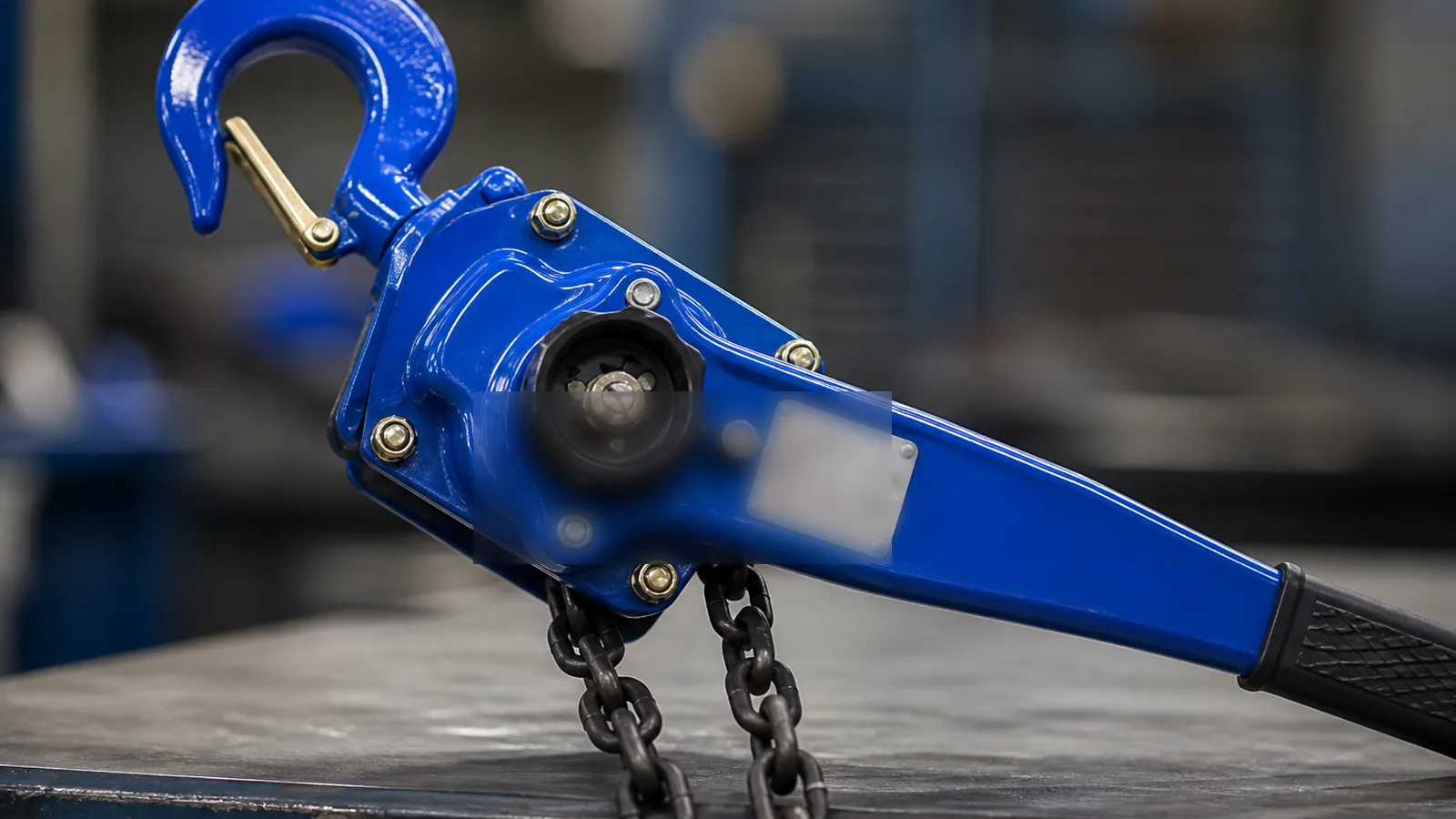
Lever hoist capacity rating explained UK: UK Practical Guide
A lever hoist capacity rating explained UK reading starts with the marked working load on the hoist’s rating plate: that figure is the limit for the whole assembly under normal use, not a target to stretch. For a 0.75t-class manual ratchet lever hoist used for warehouse, construction or automotive lifting and pulling, treat the plate, the chain grade and competent workplace practice as the only authoritative guides—never guess or invent figures.
Plain-English definition
A lever hoist (also called a ratchet lever hoist or come-along) is a hand-operated lifting and pulling tool. You work a lever to take up chain and move or hold a load within the capacity shown on the unit. Capacity rating is simply the manufacturer’s marked load limit for that model when it is used, inspected and maintained as intended.
Manufacturer manuals for heavy-duty lever hoists emphasise that the equipment is designed to keep its operational features under normal operating conditions, and that careful operation plus regular maintenance support satisfactory service over time. That framing matters in the UK: the rating only holds if the hoist is used within those conditions.
How the mechanism relates to the job
On a typical job you choose a hoist whose marked capacity covers the load, then use the lever and ratchet mechanism to lift, lower or pull in a controlled way. The chain and load path must suit the task; a Manual Lift 0.75t 6M ratchet lever hoist with G80 steel chain is projected for warehouse, construction and automotive lifting or pulling within that 0.75t class—not beyond it.
Professional designs may incorporate advanced safety features such as one-piece construction pinion gears, dual brake systems and multi-pawl arrangements. Those features support controlled operation; they do not replace reading the rating plate or following site procedures.
Lever hoist vs chain block UK
A lever hoist is usually portable and operated by hand lever for lifting or pulling in positions where a hanging chain block is less practical. A chain block (chain hoist) is typically operated by hand chain and hung from a suitable anchorage for vertical lifting. Capacity rating applies to both: use the marked limit for the tool you have selected, and do not treat one type’s habits as a licence to overload the other.
Rating marks and what not to invent
Before use, read the capacity marking on the hoist itself. For this class of tool, stay within the stated 0.75t rating. Use confirmed details safe working load numbers, test certificates or examination stickers that are not on the equipment or in your own records.
- Check the rating plate and any durable markings on the hoist and chain.
- Confirm the load is within the marked capacity before you start.
- Follow the maker’s instructions for careful operation and regular maintenance.
- If markings are missing, unclear or damaged, stop and seek competent advice—do not estimate a rating.
Checklist before buying lever hoist UK
- Match marked capacity to the heaviest load you will handle, with margin only through choosing a higher marked class—not through overloading.
- Confirm lift length (for example 6 m of chain) suits the reach of typical jobs.
- Check that chain grade and fittings are appropriate for your application and site rules.
- Plan inspection and maintenance routines from day one, in line with the manufacturer’s guidance.
- Keep documentation with the tool; do not rely on informal claims about certification or past test results.
UK workplace framing
On UK sites, capacity rating sits inside wider duties for planning lifts, selecting suitable equipment and keeping it in safe condition. Point teams to the rating plate and to competent advice rather than verbal estimates. This article does not claim LOLER certification status or examination outcomes for any specific product; those depend on your own arrangements and evidence.
Common mistakes using lever hoist UK
- Assuming a “heavy duty” label allows loads above the marked rating.
- Inventing or repeating unverified SWL or test numbers.
- Skipping routine checks that manuals link to years of satisfactory service.
- Using the hoist for tasks outside normal operating conditions without reviewing suitability.
Next step
If you need a compact 0.75t-class manual ratchet lever hoist for warehouse, construction or automotive lifting and pulling, review the Manual Lift 0.75t 6M ratchet lever hoist product details and confirm the marked rating against your load before purchase or use.
FAQ
What does a lever hoist capacity rating mean?
It is the manufacturer’s marked maximum load for that hoist under normal operating conditions. Stay within the plate figure—for a 0.75t-class unit, do not treat any higher figure as valid unless the marking says so.
Where should I look for the rating?
On the hoist’s rating plate and durable markings. If they are absent or illegible, use confirmed details a number; take the tool out of service until a competent person advises.
Does careful use change the marked capacity?
No. Careful operation and regular maintenance help the hoist retain its designed operational features; they do not increase the marked capacity.
How does this differ from a chain block’s rating?
The meaning of the marked limit is the same: do not exceed it. The difference is mainly how you operate and position the tool, not permission to overload.