Lever hoist vs chain block UK: UK Practical Guide
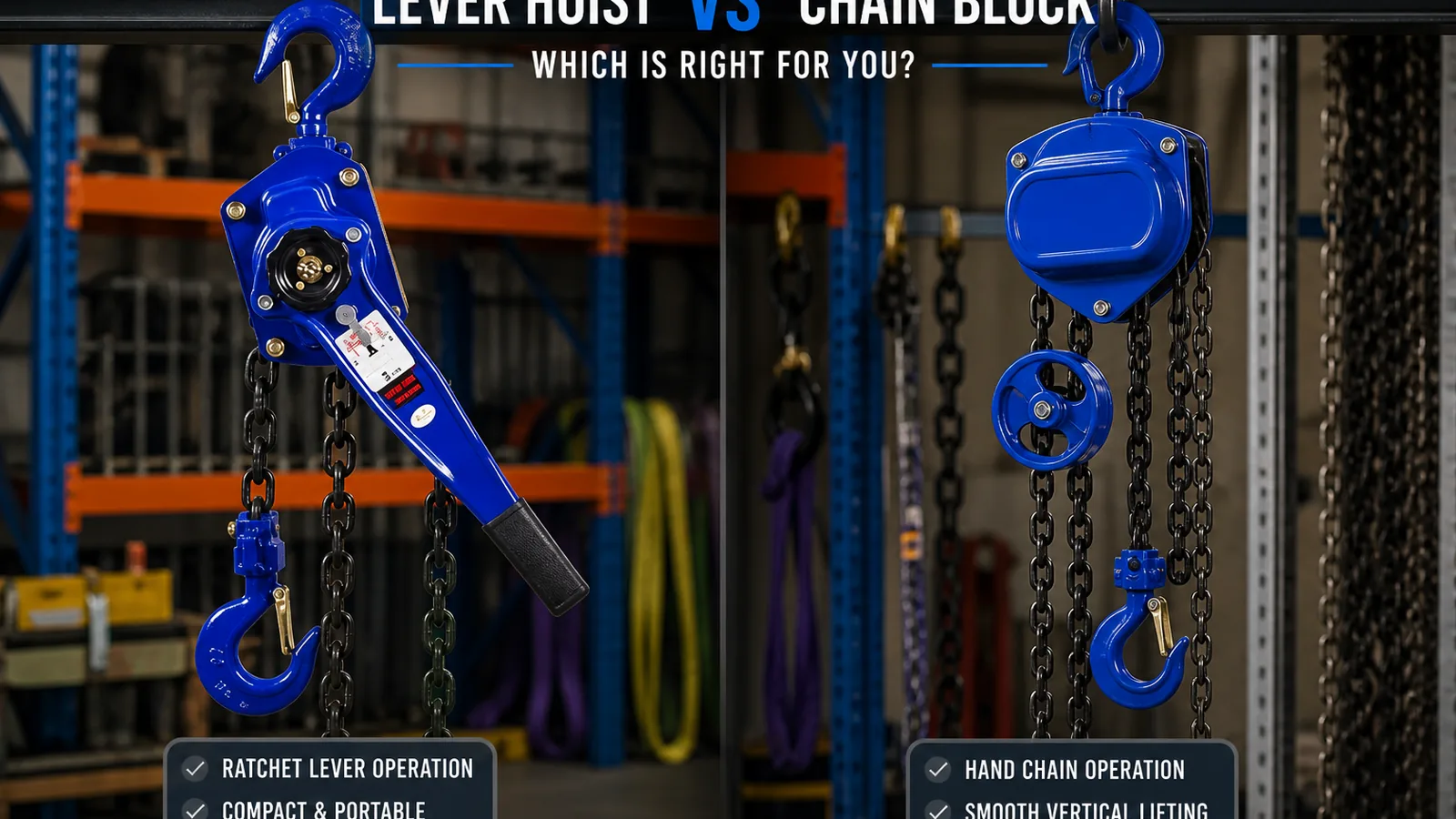
For most UK site work, the lever hoist vs chain block UK decision comes down to lift direction and how you need to position the load: a chain block is typically chosen for straightforward vertical lifting, while a lever hoist (also called a ratchet lever hoist or come-along) is better when you need pulling, tensioning or more flexible positioning in tight spaces.
Direct comparison answer
Both tools are common manual lifting options on UK jobs. Independent UK guidance notes that the choice often hinges on the direction of the lift, with a chain block built primarily for vertical work, whereas a lever hoist is used where the operator needs lever-operated control for pulling or angled positioning as well as lifting. Broader comparisons of mechanisms, uses and advantages also emphasise matching the tool to the job rather than treating the two as interchangeable.
In short: pick a chain block when the path is mainly straight up and down from a suitable suspension point; pick a lever hoist when you need compact, hand-lever operation for lifting, pulling or tensioning in confined or awkward layouts.
When each option wins
Chain block
- Primarily vertical lifts from a beam, gantry or other rated anchor.
- Repeated up-and-down handling where hand-chain operation suits the workflow.
- Situations where the load path is clear and the hoist can hang directly above the load.
Lever hoist
- Lifting, pulling or tensioning where a compact ratchet lever is easier to use than a hanging hand chain.
- Warehouse, construction and automotive tasks that need controlled positioning in limited space.
- Jobs where the operator must work closer to the load and adjust direction carefully.
Capacity and use-case table
Always read the rating plate on the specific unit. Lever hoist capacity rating explained UK practice is simple: do not exceed the marked working load, and do not assume one model’s class applies to another. The product class discussed here is a 0.75t Manual Lift ratchet lever hoist with a 6 m G80 steel chain, intended for warehouse, construction and automotive lifting and pulling within that stated class.
| Factor | Chain block | Lever hoist |
|---|---|---|
| Typical lift direction | Mainly vertical | Vertical, angled and pulling/tensioning uses |
| Operator input | Hand chain | Ratchet lever |
| Space fit | Needs clear overhead path for the hand chain | Often preferred in tighter working positions |
| Example class in this guide | Compare against the plate on your unit | 0.75t / 6 m G80 chain class (Manual Lift) |
Safety and competence caveats
Manual lifting gear must be selected, used and maintained by competent people. Check the rating plate, suspension point, chain condition and hooks before every use. Use confirmed details or rely on assumed examination stickers, certificates or unverified safe working loads beyond what the plate states.
A practical checklist before buying lever hoist UK buyers should run through: confirmed capacity class for the heaviest planned load; chain length and grade suited to the reach; hooks and latching that match the attachment method; and clear instructions for inspection and storage.
Common mistakes using lever hoist UK sites include overloading past the marked rating, using damaged or twisted chain, side-loading hooks, and treating a lever hoist as a substitute for a properly planned lift. If you are unsure about duty, inspection intervals or regulatory duties such as LOLER examinations for your workplace, seek competent advice rather than guessing from marketing copy.
For a wider UK comparison of capacities, applications and compliance themes around these tools, see this UK engineers’ chain block versus lever hoist overview. Additional mechanism and use comparisons are available in this lever hoist versus chain block mechanisms guide and this LinkedIn note on lift direction for UK sites.
Soft product next step
If a compact 0.75t class ratchet lever hoist with a 6 m G80 steel chain fits your warehouse, construction or automotive lifting and pulling needs, review the current product details for the Manual Lift 0.75t 6M ratchet lever hoist and confirm the rating plate and accessories against your planned task before purchase.
FAQ
Is a lever hoist the same as a chain block?
No. Both are manual lifting tools with chain, but a chain block is generally set up for vertical hand-chain lifting, while a lever hoist uses a ratchet lever and is often chosen for pulling, tensioning and more flexible positioning as well as lifting.
How do I read lever hoist capacity rating explained UK markings?
Use only the working load shown on the rating plate of that specific hoist. A 0.75t class unit must not be used above that marked limit, and chain length or grade on one model should not be assumed for another.
What belongs on a checklist before buying lever hoist UK?
Confirm capacity class, chain length and grade, hook and latch condition, intended lift or pull direction, and whether your team has the competence and inspection process for safe use.
What are common mistakes using lever hoist UK crews should avoid?
Overloading, ignoring damaged chain or hooks, incorrect attachment, and skipping competent planning or examination requirements for the workplace.